Website security used to be an afterthought for small businesses. That’s changed. Hackers now target small sites specifically, because many of them have weaker defenses than a large company’s. If your site handles customer information, payments, or even just a contact form, website security is no longer optional. It’s part of running the business.
Why Website Security Matters More Than Ever
A hacked website costs more than a headache. It can get flagged by Google and hidden from search results. It can leak customer data and destroy trust overnight. Meanwhile, downtime during an attack means lost leads and lost sales while the problem gets fixed. In short, website security isn’t just an IT concern — it’s a business one.
Common Web Security Threats Small Businesses Face
The Cybersecurity and Infrastructure Security Agency (CISA) notes that small businesses are frequent targets precisely because they often have fewer defenses in place. The most common entry points are simple ones.
- Outdated software. An old CMS version or plugin is one of the easiest ways in for attackers.
- Weak passwords. Reused or simple passwords remain one of the most common causes of a breach.
- No SSL certificate. Without HTTPS, data traveling between your site and your visitors isn’t encrypted.
- No backups. Without a recent backup, a single attack can undo months or years of work.
- Malicious code injection. Attackers often hide malware inside a compromised site without the owner noticing for weeks.
What Real Web Security Looks Like
Good website security isn’t one plugin or a single setting. Instead, it’s a combination of habits and infrastructure working together.
- HTTPS and SSL on every page, not just the checkout or login screen
- Regular updates to the CMS, themes, and plugins as soon as patches are available
- Automated backups stored separately from the live site
- Firewall and malware scanning running continuously in the background
- Secure, reputable hosting instead of the cheapest shared plan available
Why You Should Choose Potomac Web Design
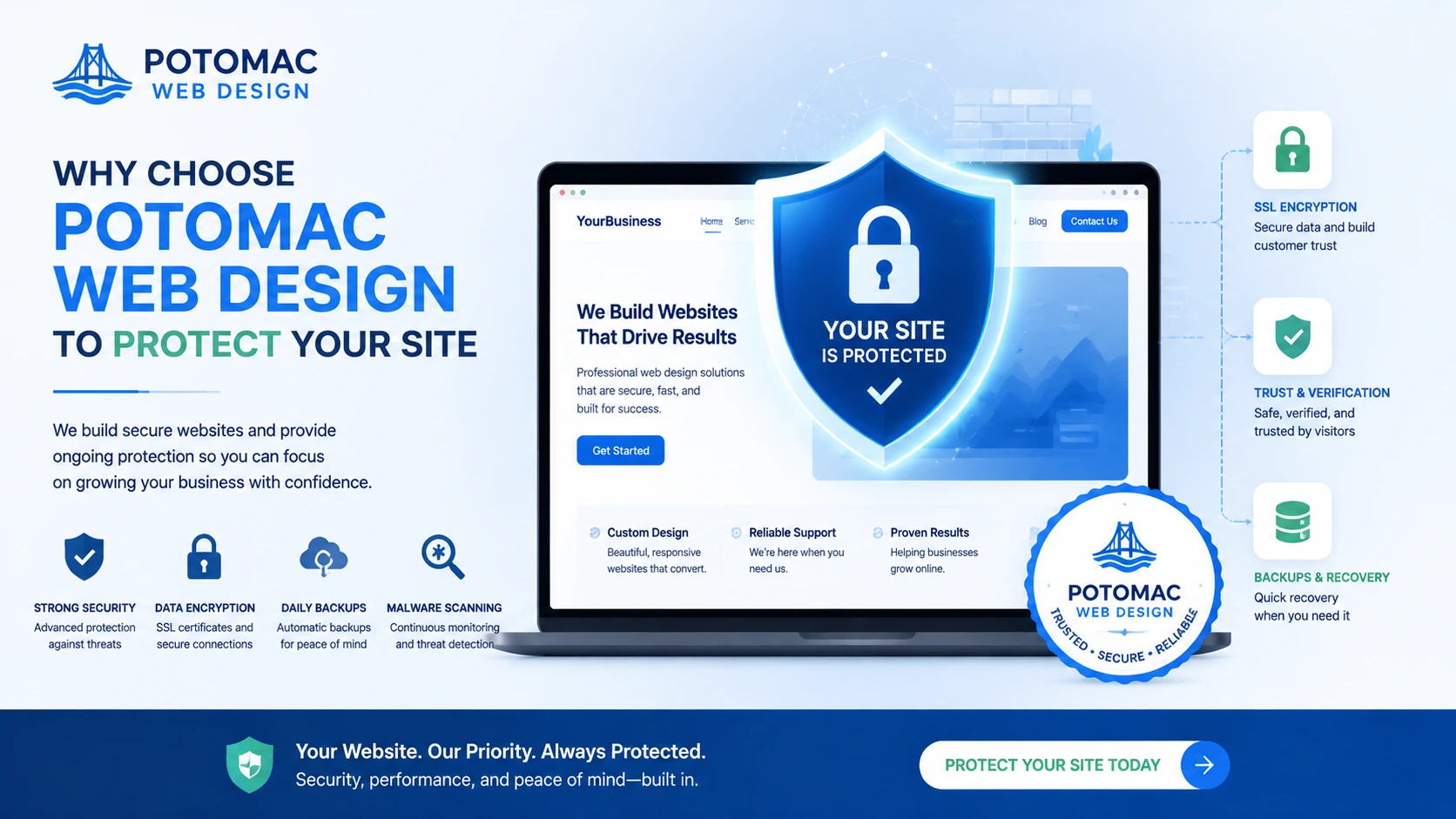
We build website security into every site from the first line of code, not as an add-on after launch. That means HTTPS by default, clean and current code, and a hosting setup chosen for reliability, not just price. Additionally, we keep an eye on updates and vulnerabilities after launch, so security stays current instead of quietly falling behind. This auto repair shop website we built is a good example. It’s fast, modern, and built on a secure, well-maintained foundation from day one.
A Secure Website Is Also a Fast Website
Security and speed often go hand in hand. A bloated site full of unnecessary plugins is usually both slower and more vulnerable. After all, every extra plugin is one more thing that needs monitoring and updating. We cover the speed side of that equation in Website Speed and SEO: Why Your Website Needs Both.
The Real Cost of Skipping Website Security
Fixing a hacked website almost always costs more than preventing the attack in the first place. Recovery can mean lost revenue during downtime and a damaged reputation. It can also mean hours spent cleaning up malware or restoring backups that may not even exist. Want context on the upfront cost instead? See our breakdown of what a business website actually costs in 2026.
What to Ask Any Agency About Website Security
Not every web design company treats security the same way, so it’s worth asking directly. Do they include SSL by default? Who handles updates after launch, and how often? Is there a backup system in place, and how quickly can it restore your site if something goes wrong? Want the fuller list of questions? See how to choose a web design agency you can actually trust.
Frequently Asked Questions
How do I know if my website has already been compromised?
Warning signs include unexpected redirects, unfamiliar admin users, a Google warning in search results, or a sudden drop in traffic. A malware scan is the fastest way to confirm it.
Is website security only important for e-commerce sites?
No. Any site that collects information through a contact form or stores login credentials is a target. So is a site that simply represents your business publicly. E-commerce sites face extra risk, but they aren’t the only ones.
How often should a website be backed up?
For most small business sites, daily automated backups are a reasonable standard. Store them somewhere separate from the live server, so an attack can’t wipe out both at once.
Does an SSL certificate really make a difference?
Yes. It encrypts data between your site and your visitors. Without it, most browsers show a visible “not secure” warning that damages trust immediately.
Can website security actually affect my SEO rankings?
Yes. Google factors in HTTPS as a ranking signal. A hacked or blacklisted site can also be removed from search results entirely until it’s cleaned up and reviewed.
Want a website built with real security from day one? Take a look at our web design services. Then let’s talk about protecting your site the same way we’d protect our own.







Add comment