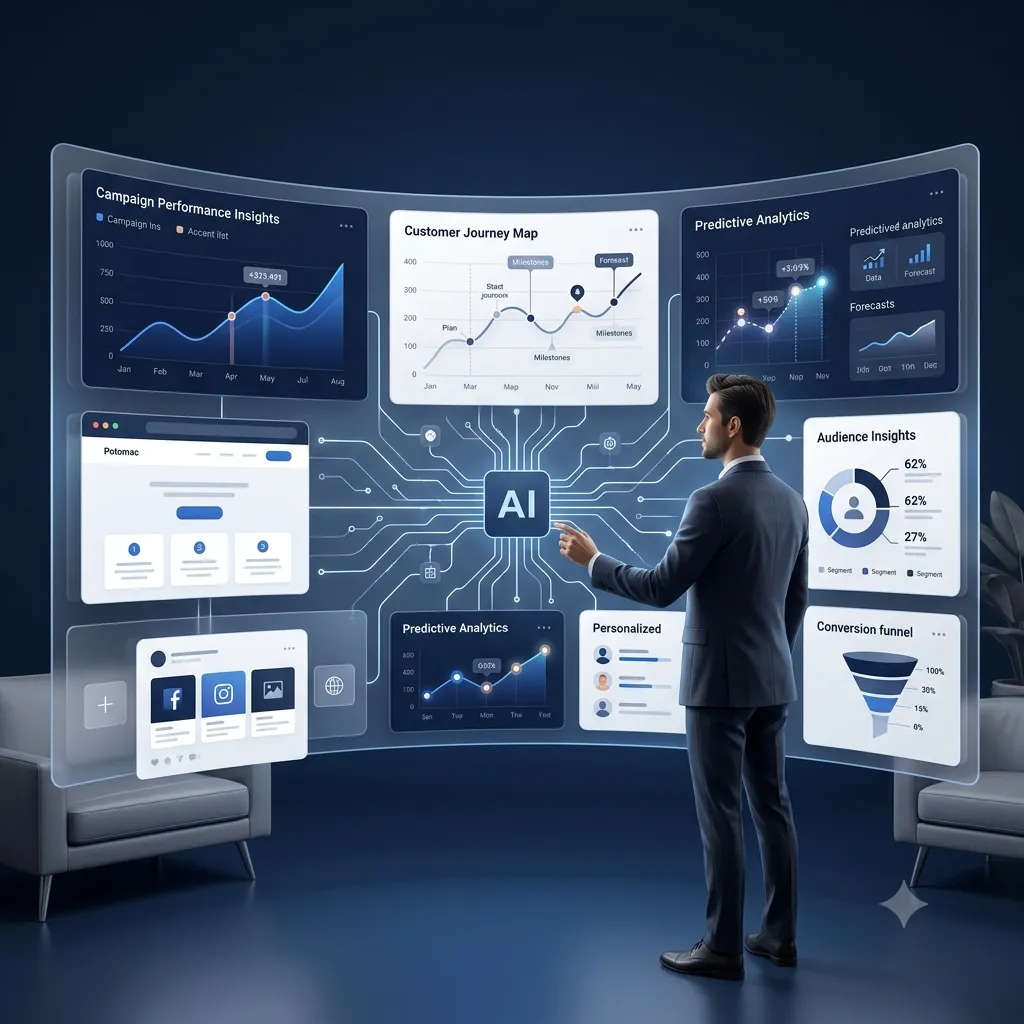
AI digital marketing tools now run a huge share of ad spend on Google and Meta. Google’s Performance Max and Meta’s Advantage+ automatically handle bidding, targeting, and even creative testing. That sounds like marketing on autopilot. In practice, though, these systems only perform as well as the strategy and creative a human feeds into them.
What AI Digital Marketing Tools Actually Do Well
To be fair, these tools are genuinely powerful at certain tasks. They process signals across huge audiences faster than a person ever could, adjust bids in real time, and test creative combinations at a scale no human team could manage manually. For repetitive, data-heavy work, that speed is a real advantage.
Where AI Digital Marketing Falls Short
The catch is that these systems are often described as a “black box.” They optimize toward whatever goal and inputs you give them, but they can’t tell you why a customer actually chose your business over a competitor. Worse, automated campaigns sometimes take credit for sales that would have happened anyway, since the system optimizes for measurable signals, not real incremental growth.
What Google Itself Says About AI Ad Tools
It’s worth staying accurate here instead of overstating the case. Google’s own Performance Max documentation is direct about this: the system uses Google AI across bidding, budgets, and creative selection, but all of it runs on the audience signals and creative assets a business provides. In other words, even Google’s own guidance treats the human input as the fuel, not an afterthought.
Why Human Strategy Still Drives Better Marketing Results
Creative quality and audience understanding still come from people, not algorithms. A human strategist knows which offer will actually resonate with your specific customers, which is something the AI can only guess at from data patterns. Additionally, a person can catch when automated systems are quietly wasting budget on customers who would have converted anyway.
Our Digital Marketing Approach at Potomac Web Design
We use AI-powered platform tools where they genuinely help, since ignoring Performance Max or Advantage+ entirely would mean leaving real efficiency on the table. However, the strategy behind them, the creative direction, and the audience targeting all start with a person who understands your business first. That’s the difference between letting a platform run itself and actually managing it.

Marketing in Practice: A Real Example
Take this cosmetics and skincare store we designed as an example. The product photography, pricing structure, and checkout flow were all built around how real beauty shoppers browse and buy, which gives any ad platform’s AI genuinely strong creative to work with instead of generic stock assets.
AI Digital Marketing and Your SEO Strategy
Paid automation is only one half of the picture. For the organic side of this same debate, see our breakdown of AI SEO tools vs. human SEO.
Weighing Paid Automation Against Organic Growth
If you’re deciding how to split a marketing budget between paid and organic, that decision matters just as much as which AI tools to use. Our guide to SEO vs. Google Ads covers that tradeoff in more detail.
Choosing a Digital Marketing Partner in the AI Era
Ask any agency directly how much of your campaign is actually managed versus left to run on autopilot. For the fuller list of questions worth asking before you sign anything, see how to choose a web design agency you can actually trust.
Frequently Asked Questions
Should I let AI fully manage my ad campaigns?
Not entirely. Tools like Performance Max and Advantage+ work well for bidding and testing at scale, but they still need a person providing strong creative, accurate goals, and ongoing oversight to avoid wasted spend.
Why do automated ad platforms sometimes underperform manual campaigns?
Automated systems can take credit for conversions that would have happened anyway, since they optimize for measurable signals rather than true incremental growth. Incrementality testing is the usual way to check for this.
Does AI digital marketing replace the need for a strategist?
No. These tools handle execution at scale, but strategy, creative direction, and understanding your actual customers still require human judgment.
What’s the biggest mistake businesses make with AI ad tools?
Handing over a campaign with weak, generic creative and expecting the AI to fix it. Since these systems optimize based on what you give them, poor inputs usually lead to poor results.
Can AI digital marketing work well for a small local business?
Yes, if it’s set up correctly. Small businesses often benefit most from human-guided strategy, since a generic AI-only approach rarely accounts for local competition and community-specific customer behavior.
Want digital marketing built on real strategy instead of autopilot? Take a look at our web design and marketing services. Then let’s talk about what actually makes your business worth choosing.



Add comment