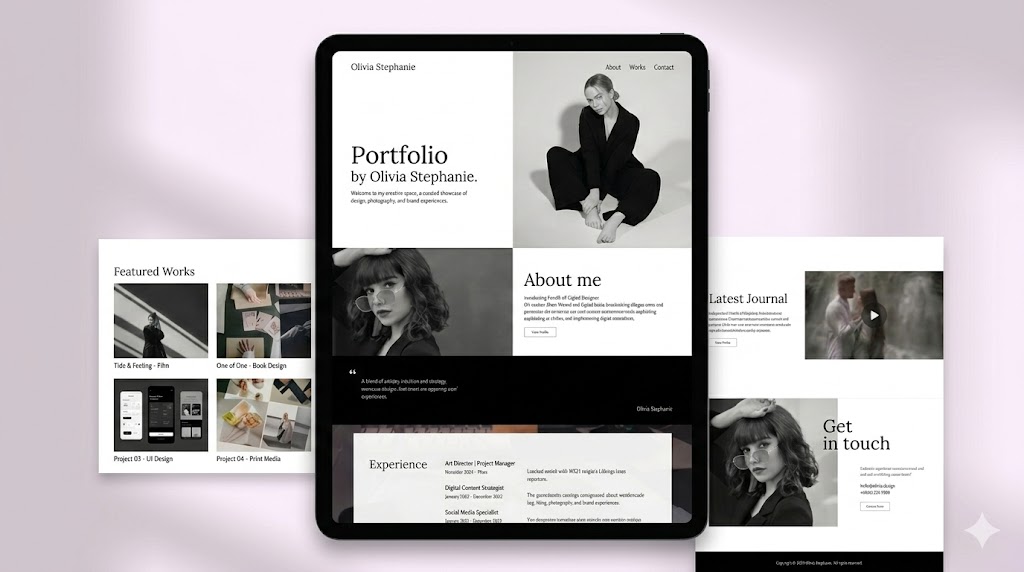
A portfolio website is the single most important tool a creative professional can have. Whether you’re a graphic designer, photographer, developer, writer, illustrator, or any other type of creative, your portfolio website is your first impression with potential clients and employers. Unlike a resume, which tells people what you’ve done, a portfolio shows them. In a competitive field where everyone is claiming to be skilled, talented, and experienced, showing up with a well-crafted portfolio website immediately separates you from the majority of candidates who don’t have one or have one that does more harm than good.
Less Is More When It Comes to What You Show
The most common mistake people make with portfolio websites is including too much work. It feels counterintuitive — surely showing more work demonstrates more experience — but the opposite is true. Visitors to your portfolio will judge your entire body of work by the weakest piece in it. A tightly curated selection of eight to twelve truly exceptional pieces will always make a stronger impression than fifty pieces of varying quality. Every project you include should be something you’re genuinely proud of and that represents the type of work you want to be hired to do more of. If a piece doesn’t meet that bar, leave it out regardless of how much effort went into it.
Your About Page Matters More Than You Think
People hire people, not portfolios. Your about page is where visitors go to figure out who you are behind the work, and a surprising number of hiring decisions hinge on whether that page creates a genuine human connection. A strong about page goes beyond a dry list of credentials and communicates your personality, your values, your creative philosophy, and what makes you different from everyone else with a similar skill set. It doesn’t need to be long — a few well-written paragraphs and a good photo can do more than a wall of text and a list of software logos. Write it the way you’d introduce yourself to someone you respect, not the way you’d fill out a job application.
The Technical Side of a Portfolio Website
How your portfolio website performs technically is just as important as how it looks. A portfolio that loads slowly, breaks on mobile, or has images that take forever to appear sends exactly the wrong message for someone whose job is to build things on the internet or create compelling visual experiences. Your site should load in under two seconds, look flawless on every screen size, and navigate intuitively without any confusion. These things aren’t just nice to have — they’re demonstrations of your competence. A developer with a buggy portfolio or a designer with a visually inconsistent one is inadvertently telling potential clients that their professional work might have the same problems.
Make It Easy to Contact You
It sounds obvious but a surprising number of portfolio websites make it genuinely difficult to get in touch. Buried contact pages, forms that don’t work on mobile, no email address listed anywhere, or a contact page that simply says “reach out” with no actual mechanism to do so — these are all friction points that cost real opportunities. Every page of your portfolio should have an obvious, accessible way to reach you. The moment someone decides they want to hire you, they should be able to act on that impulse immediately without having to hunt around. Reduce the steps between interest and contact to as few as possible and you’ll convert more visitors into real conversations.
Show Your Process, Not Just the Result
The finished product is what catches attention, but showing your process is what builds genuine confidence in your abilities. Clients and employers aren’t just buying the end result — they’re buying into the experience of working with you and trusting that you’ll navigate challenges thoughtfully along the way. Including process work, sketches, early concepts, iteration notes, or brief written explanations of the decisions you made during a project gives visitors a window into how you think. This is especially valuable for complex or technical work where the final output alone doesn’t communicate the depth of skill and problem-solving involved in getting there.
Keep It Updated and Keep It Yours
A portfolio website is never truly finished. As your skills grow, your taste evolves, and your work improves, your portfolio should reflect that progression. Set a reminder to review and refresh it every few months — retiring older work, adding recent projects, and making sure everything still represents where you are now rather than where you were two years ago. Equally important is resisting the temptation to make your portfolio look like everyone else’s. Templates and trends are fine starting points but the most memorable portfolio websites have a distinct visual identity that reflects the personality of the person behind them. In a field where differentiation matters, a portfolio that looks like a thousand others is already at a disadvantage before anyone looks at the work.






Add comment