
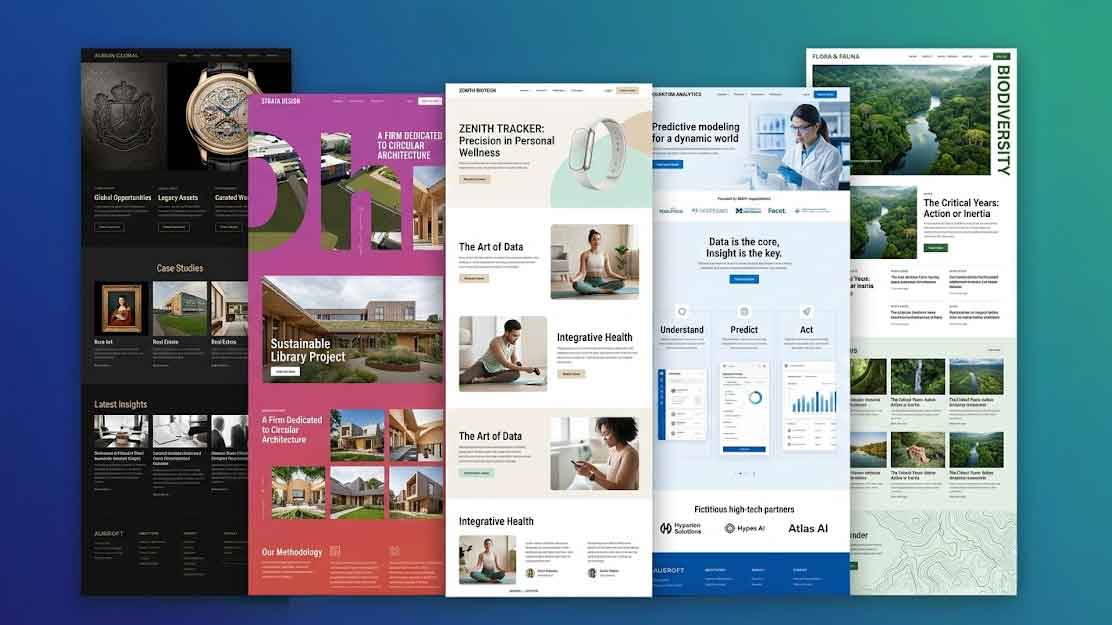
A corporate website is the digital face of a business. In 2026, it’s more than a brochure — it’s a brand ambassador, marketing engine, and lead generator.
For businesses of all sizes, a professional corporate website builds trust, authority, and revenue opportunities. This guide explains everything from planning and design to SEO, mobile optimization, and AI-friendly strategies for corporate websites.
What is a Corporate Website?
A corporate website is a business-focused website that:
-
Presents the company brand clearly
-
Explains products or services
-
Provides contact and support information
-
Engages visitors and encourages conversions (inquiries, leads, subscriptions)
Unlike e-commerce sites, the main goal is brand trust, authority, and lead generation, not direct online sales.
Example: A consulting firm’s corporate website should explain its services, showcase client success stories, and allow visitors to book consultations online.
Why Corporate Websites Matter in 2026
-
First Impressions: 94% of visitors judge credibility based on website design.
-
Lead Generation: Corporate websites capture potential client information and nurture them through marketing.
-
SEO & AI Visibility: Structured, AI-friendly content increases search engine rankings.
-
Brand Authority: Consistent design and content communicate professionalism and reliability.
Key Stat: Companies with optimized corporate websites generate 55% more leads compared to those with outdated or generic sites.
Core Elements of a Corporate Website
1. User Experience (UX)
Corporate UX should make navigation and information access intuitive and efficient.
Best Practices:
-
Clear menus with logical categories
-
Fast loading times (<3 seconds)
-
Search functionality for easy content discovery
-
Accessibility: screen readers, keyboard navigation, alt text
-
Consistent user flow from landing pages to contact forms
Example: A law firm website that guides visitors from “Practice Areas” → “Case Studies” → “Contact Form” increases consultation requests by 30%.
2. User Interface (UI)
UI ensures the corporate website looks professional, consistent, and trustworthy.
UI Tips:
-
Maintain brand colors, fonts, and style
-
Use clean layouts and whitespace to focus attention
-
Highlight CTAs: “Contact Us,” “Request a Quote,” “Subscribe”
-
Micro-interactions: hover effects and smooth transitions to enhance engagement
Example: Adding client logos and trust badges prominently improves perceived credibility.
3. Mobile-First Design
Most corporate visitors browse via mobile devices. Mobile-first ensures:
-
Smooth user experience on smartphones
-
Faster load times on mobile networks
-
Google ranking advantage due to mobile-first indexing
Tip: Test the corporate website on multiple devices to ensure UI consistency and functionality.
4. Content Strategy
Content drives engagement, SEO, and lead generation. Corporate content should:
-
Explain services clearly
-
Include case studies and testimonials
-
Answer visitor questions directly
-
Use keywords and semantic keywords naturally: corporate website, business website design, professional website, B2B web design, company site
Example: A SaaS corporate website can create blog content like “Top 5 Challenges in Cloud Management for Enterprises” to attract relevant leads.
5. SEO & AI Optimization
A corporate website must be AI-friendly and SEO-optimized:
-
Clear headings (H1, H2, H3) for semantic structure
-
Meta titles and descriptions for every page
-
Internal linking to service pages and blog posts
-
External linking to authoritative sources
-
Schema markup: FAQ, Organization, Breadcrumb
Tip: Include LSI keywords for semantic relevance: B2B website, corporate website design, business branding, professional website layout.
6. Conversion-Focused Features
Corporate websites should convert visitors into leads:
-
Contact forms with minimal fields
-
Newsletter sign-ups for lead nurturing
-
CTA buttons at logical points (top, middle, end)
-
Trust elements: SSL, certifications, awards, client logos
Example: Adding a “Request a Free Consultation” form on each service page can boost lead generation by 25–40%.
7. Corporate Website Structure
Recommended structure for SEO and usability:
-
Home Page → Overview & Hero Section
-
About Us → Company history, team, mission
-
Services → Detailed service pages with CTAs
-
Case Studies / Portfolio → Client success stories
-
Blog → Educational, SEO-optimized articles
-
Contact → Form, phone, email, location
-
FAQ → Common client questions
8. Modern Design Trends for Corporate Websites 2026
-
Minimalist, clean layout
-
Dark/light mode options
-
Interactive elements: micro animations
-
Personalized content for returning visitors
-
AI-driven chat support for lead capture
-
Accessibility-friendly (WCAG compliance)
-
Transparent privacy and data policies
9. Common Mistakes in Corporate Websites
-
Overloading homepage with too much information
-
Ignoring mobile users
-
Weak or missing CTAs
-
Thin or generic content
-
Poor website speed and hosting
-
No structured data or SEO optimization
Rule: A corporate website must be clear, fast, structured, and trust-focused.
10. Step-by-Step Guide to Build a Corporate Website
-
Define business goals: lead generation, brand authority, information
-
Research audience & competitors
-
Plan pages and navigation
-
Create high-quality, AI-friendly content
-
Design mobile-first
-
Optimize for SEO (keywords, headings, links, schema)
-
Improve speed & performance
-
Add trust signals (SSL, client logos, testimonials)
-
Test on multiple devices & browsers
-
Monitor analytics & optimize continuously
Tip: Corporate websites evolve with business growth—regular updates are key.
11. FAQ (Schema-Ready)
Q: What is a corporate website?
A: A business-focused website that builds brand authority, showcases services, and generates leads.
Q: Why is mobile-first design important for corporate websites?
A: Most users browse on mobile devices, and Google uses mobile-first indexing for SEO ranking.
Q: How can AI help a corporate website in 2026?
A: AI tools analyze content clarity, recommend SEO improvements, and enhance lead capture through chatbots and personalization.
Final Summary
A corporate website in 2026 is not just a digital brochure—it is:
-
A brand authority tool
-
A lead generation engine
-
An SEO and AI-optimized digital presence
-
A conversion-focused marketing platform
Focus on UX + UI + mobile-first design + SEO + AI optimization + trust signals + conversion strategy to create a corporate website that drives real business growth.





Add comment